

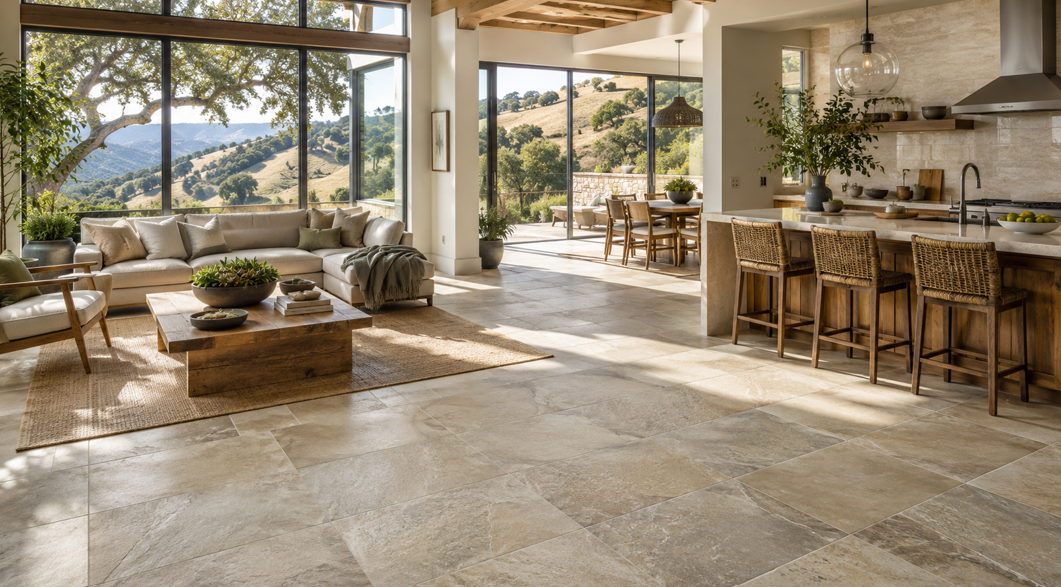
Can Tile Really Make a Home More Energy Efficient?
Tile can support a more comfortable, energy-conscious home, but it is important to be clear about what it can and cannot do. Tile does not replace insulation, efficient windows, air sealing, shading, or a properly sized heating and cooling system. It will not automatically lower utility bills simply because it is installed.
What tile can do is work well within a thoughtful whole-home design. Dense floor assemblies can absorb, store, and release heat, a property known as thermal mass. The U.S. Department of Energy explains that thermal mass can help moderate indoor temperature swings when it is used with the right building orientation, solar exposure, insulation, and operating strategy.
That can be useful in Penn Valley, where homeowners often think about staying comfortable through sunny summer days as well as cooler periods of the year. A tile floor may feel pleasantly cool underfoot in warm weather because it readily conducts heat away from the body. In a properly designed passive-solar or radiant-heating system, it can also help distribute and retain useful warmth.
At Premier Flooring Center, homeowners can compare tile styles, formats, finishes, and installation options with an employee-owned team that has served Nevada County and nearby communities since 1990. We offer design guidance and professional installation for residential projects, helping customers match flooring choices to the way their homes are built and used.
The best tile for an energy-efficient home is not simply the lightest, thickest, or most expensive option. It is the tile that suits the room, the subfloor, the heating and cooling approach, the amount of sunlight, and the household’s everyday needs.
What “Energy-Efficient Tile” Actually Means
There is no universal energy-efficiency label that makes one floor tile automatically superior. Homeowners need to consider how the complete flooring assembly interacts with the building.
Thermal Mass
Thermal mass describes a material’s ability to absorb and store heat. Dense materials can take in warmth when the surrounding temperature is higher and release it later as conditions cool.
The Department of Energy notes that interior and exterior thermal mass can contribute to comfort and energy efficiency when it helps balance changing temperatures. DOE case studies also show high-performance homes using dense floor slabs to absorb solar warmth or support radiant heating.
Tile itself is usually a relatively thin finish layer, so its effect depends heavily on what is below it. Tile installed over a concrete slab can be part of a substantial thermal-mass assembly. Tile installed over a lightweight wood-framed floor will behave differently because the overall assembly stores less heat.
Heat Transfer
Tile is a good conductor compared with softer, more insulating floor coverings. That is why it often feels cool to bare feet, even when the room air is comfortable.
This characteristic can be helpful in two ways. During warm weather, the floor can feel refreshing. With radiant heating, tile allows heat from the system below to move into the room without a thick insulating layer blocking it.
Still, greater heat transfer is not the same as guaranteed energy savings. The system design, controls, insulation beneath the floor, thermostat settings, and local energy costs all affect performance.
Durability and Service Life
Energy-conscious decisions are not limited to monthly utility use. A durable floor that remains suitable for its location may reduce the need for early replacement. Actual service life depends on the product, installation, maintenance, and exposure.
Porcelain Tile for Busy, High-Performance Spaces
Porcelain is often one of the first options homeowners consider for kitchens, entries, bathrooms, laundry rooms, and other active spaces. It is a type of ceramic tile made to meet specific standards for water absorption and performance.
Why Porcelain Can Be a Practical Choice
Porcelain comes in stone, concrete, wood, and natural-earth looks, giving Penn Valley homeowners broad design flexibility.
It can be especially useful in rooms that experience:
Tracked-in dust or dirt
Wet shoes
Pet activity
Spills
Frequent cleaning
Direct sunlight
Changes in indoor temperature
A suitable porcelain tile can provide a hard-wearing surface while remaining compatible with a thermal-mass floor or radiant-heating assembly.
Where Porcelain Works Best
Porcelain is worth considering for open kitchens, mudrooms, bathrooms, sunrooms, and connected living areas where durability and easy care are priorities.
For a home with broad south-facing windows, tile over a properly designed slab may help absorb some daytime solar warmth. That warmth can then be released as indoor temperatures fall. This approach needs careful design because too much unshaded summer sun can increase cooling demand rather than reduce it. DOE guidance on passive design emphasizes that thermal mass works as part of a coordinated strategy, not as an isolated feature.
Finish and Slip Considerations
A glossy tile may reflect more light, but that alone does not make a floor more energy efficient. In wet or entry areas, traction matters more than shine.
The Tile Council of North America maintains standards and test methods for hard-surface flooring, including a current method for measuring dynamic coefficient of friction. Product suitability still depends on the intended use, so homeowners need to review manufacturer information and installation recommendations rather than choosing by appearance alone.
Ceramic Tile for Flexible, Room-Specific Design
Ceramic tile can also suit energy-conscious interiors. Its colors, sizes, patterns, and finishes make it useful when homeowners want a practical surface with a specific design character.
Ceramic Versus Porcelain
Both belong to the broader ceramic-tile family, but they are not interchangeable in every application. Porcelain generally has lower water absorption and may suit more demanding conditions. Other ceramic tiles can work well in interior spaces when their ratings support the application. The key question is which product is designed for the room.
Energy Performance Depends on the Assembly
A ceramic tile laid over a concrete slab may contribute to thermal-mass behavior. The same tile installed over a framed subfloor will not store the same amount of heat because the supporting structure is different.
Homeowners considering ceramic tile flooring can compare product specifications, finish, size, maintenance requirements, and installation conditions before deciding which style best fits the project.
Design Advantages
Ceramic tile can support an energy-conscious design by helping rooms feel bright and comfortable without relying on one narrow visual style. Options include:
Soft limestone looks
Warm clay colors
Pale concrete visuals
Natural beige and sand
Muted terracotta
Light gray with warm undertones
Stone-inspired patterns
These colors can work especially well in Penn Valley homes that blend rustic elements with clean, contemporary finishes.
Light-Colored Tile and Summer Comfort
The July strategy for this topic focuses on summer heat and energy bills, so light-colored tile deserves careful attention. A pale floor can reflect more visible light within a room and may help an interior feel brighter. It can also create a cooler visual atmosphere than a very dark surface.
However, indoor floor color is not the same as a cool roof. Homeowners need to avoid assuming that pale tile alone will produce a measurable reduction in air-conditioning use.
Where Light Tile Helps Most
Light beige, sand, cream, soft greige, and pale stone-look tiles can be effective in:
Kitchens with limited daylight
Smaller bathrooms
Sunrooms with controlled shading
Open living areas
Hallways
Rooms with dark beams or cabinetry
A lighter floor may make daylight feel more useful, though any lighting-energy benefit depends on the room layout, windows, habits, and controls.
Avoid Excessive Solar Gain
Sunlight on a dense floor can be helpful during cooler periods, but strong summer sun can add unwanted heat. Window orientation, exterior shading, overhangs, blinds, and glazing matter more than the flooring color alone.
DOE case studies of efficient homes pair thermal-mass floors with design features such as high-performance windows, overhangs, insulation, and controlled solar exposure. This is a useful reminder that tile works best as one part of the building strategy.
Choose Warm, Natural Undertones
For many Penn Valley homes, warm light colors feel more connected to the surrounding landscape than stark white or icy blue-gray. Sand, limestone, oatmeal, and pale clay tones can create brightness while still complementing wood cabinets, stone fireplaces, and natural textiles.
Tile and Radiant Floor Heating
Radiant floor heating can make tile more comfortable during colder weather. Heat moves from tubing or electric elements below the finished surface and radiates into the room.
Tile is often selected for these systems because it does not create the same insulating barrier as thick carpet and padding. DOE high-performance home case studies include radiant floor systems as part of broader energy-efficient designs, often alongside strong insulation, air sealing, efficient heat pumps, and high-performance windows.
Hydronic Systems
Hydronic radiant floors circulate heated water through tubing and can pair with certain high-efficiency boilers or air-to-water heat pumps. They are usually easier to plan during new construction or a major renovation because the floor assembly, insulation, tubing, and controls need to work together.
Electric Systems
Electric radiant systems use heating cables or mats and are often considered for smaller areas such as bathrooms. Operating cost depends on system size, electricity rates, controls, insulation, and run time. Programmable controls may help avoid heating an unused room, while a whole-house system requires a detailed energy and cost assessment.
Insulation Below the System Matters
Without appropriate insulation beneath the radiant assembly, some heat can move in the wrong direction. The complete design needs to direct useful heat into the occupied space.
This is one reason flooring selection needs to happen alongside building and mechanical planning. The tile may transfer heat effectively, but it cannot correct an inefficient heat source, missing insulation, or poor controls.
Best Tile Looks for Penn Valley Homes
Energy-conscious flooring still needs to make the home feel inviting. The strongest choice combines practical performance with a style that works across seasons.
Limestone and Travertine Looks
Warm limestone and travertine-inspired porcelain can create a relaxed, natural appearance. Beige, cream, and sandy tones pair well with wood cabinetry, leather furniture, and stone features.
These looks are useful for homeowners who want a floor that feels bright in summer but not stark during winter.
Concrete-Look Tile
Concrete visuals suit modern ranch, transitional, and contemporary interiors. Warm gray or greige versions are usually easier to coordinate than cold blue-gray shades.
Large-format concrete-look tile can reduce the visual number of grout lines, though installation requires a suitably prepared and flat surface.
Terracotta and Clay Tones
Muted clay, rust, and terracotta colors can create a warm foothill character. They work especially well in kitchens, entries, and covered indoor-outdoor transition areas when the selected product is rated for the application.
These tones absorb more visible light than pale tile and may feel warmer visually, so they are better chosen for atmosphere and design than for a “cooling” claim.
Wood-Look Porcelain
Wood-look porcelain offers the appearance of planks with tile’s hard-surface qualities. It can suit kitchens, mudrooms, and homes where real-wood visuals are desired alongside radiant heating or moisture resistance.
The most natural results usually come from varied plank graphics, balanced grout color, and careful layout. Repeating identical patterns too close together can make the floor look less convincing.
Sustainable Tile Selection Goes Beyond Energy Bills
A sustainable flooring decision includes manufacturing, material transparency, durability, installation materials, maintenance, and end-of-life considerations.
The Tile Council of North America identifies Green Squared as a multi-attribute sustainability standard for ceramic tile, glass tile, and related installation materials. The standard considers product characteristics, manufacturing and raw-material practices, end-of-life management, corporate governance, and innovation.
Ask for Product Documentation
Helpful documents may include:
Environmental Product Declarations
Manufacturer sustainability information
Material ingredient disclosures
Third-party certifications
Technical data sheets
Installation instructions
Care and maintenance guidance
An Environmental Product Declaration reports environmental impacts using a defined methodology and can help buyers compare documented information.
Consider Regional and Long-Term Factors
A tile that lasts, remains appropriate for the room, and does not need early replacement may be a more responsible choice than one selected only for a short-lived trend.
Homeowners can also ask where products are manufactured and whether replacement pieces are likely to remain available. Keeping extra tiles after installation can simplify future repairs.
Installation Details That Protect Performance
Even a high-quality tile can underperform when the surface below it is not ready. Proper preparation supports appearance, durability, and long-term value.
Start With the Subfloor
The subfloor or slab needs to meet the requirements for flatness, stability, cleanliness, and moisture condition. Cracks, movement, or uneven areas can affect the finished installation.
The 2026 TCNA Handbook emphasizes properly designed, constructed, and prepared supporting structures, along with recognized installation standards.
Use the Right Installation System
Mortar, grout, membranes, backer boards, movement accommodation, and waterproofing need to suit the tile and location. A shower floor has different requirements from a living room, and an exterior installation faces conditions that do not apply indoors.
Plan Transitions Carefully
Tile height can affect door clearances and transitions to hardwood, carpet, laminate, or resilient flooring. Early planning helps the finished floor look intentional and reduces awkward edges.
Think About Maintenance
Tile is often easy to clean, but grout and textured finishes may need different care. A finish that hides dust and provides appropriate traction may be more practical than a highly polished surface in an active household.
Following manufacturer guidance helps protect the floor’s appearance and avoids cleaners or methods that could damage the surface.
Build a More Comfortable Home, Not Just a Cooler Floor
The best tiles for an energy-efficient Penn Valley home are products that fit into a broader comfort plan. Porcelain and ceramic tile can work well with dense slabs, controlled passive-solar design, and radiant heating. Light, natural colors can make rooms feel brighter and visually cooler, while durable construction can support long-term value.
The main points are straightforward:
Tile does not replace insulation, air sealing, shading, or efficient HVAC.
Thermal-mass benefits depend on the complete floor assembly and building design.
Porcelain can be a practical choice for demanding, high-traffic rooms.
Ceramic tile offers broad design flexibility when it is rated for the intended use.
Light colors can brighten a room, but they do not guarantee lower cooling costs.
Radiant heating performance depends on the system, insulation, controls, and heat source.
Sustainability claims are stronger when they are supported by recognized documentation.
A thoughtful selection begins with the room, not a trend. Consider sunlight, subfloor construction, moisture exposure, traction, maintenance, grout, and the way the rest of the home is heated and cooled.
To compare tile options and discuss a floor that fits your home’s design and performance goals, get in touch with the Premier Flooring Center team.


