

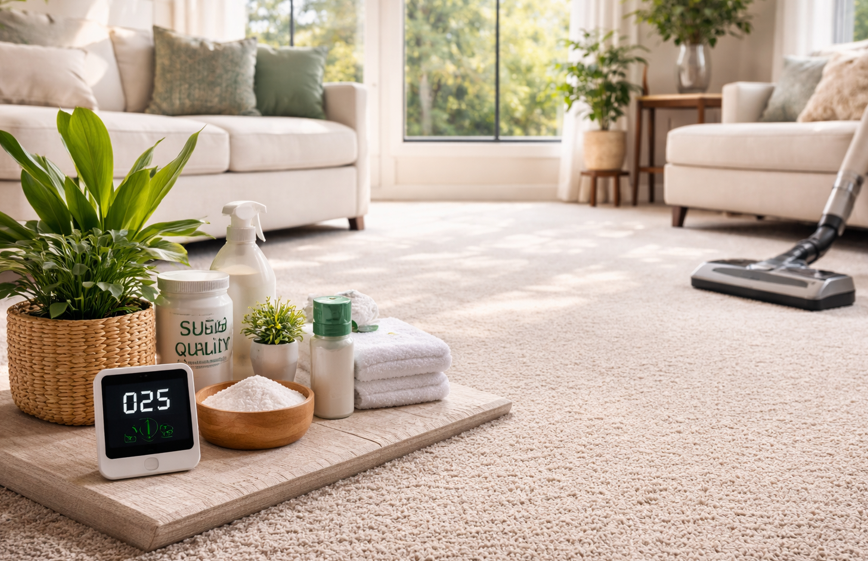
Understanding the Role of Carpet in a Healthier Home
When it comes to creating a comfortable and inviting home in Auburn, indoor air quality is something many homeowners think about—especially for families, pet owners, or anyone sensitive to dust and allergens. One question that often comes up is whether carpet actually helps or harms indoor air quality.
For years, there’s been a common belief that carpet traps dust in a negative way. But modern carpet technology—and a better understanding of how indoor environments work—tell a more balanced story.
Carpet can play a surprisingly helpful role in maintaining a clean, comfortable indoor environment when it’s properly selected and cared for. It’s not just about softness underfoot—it’s about how materials interact with the air inside your home.
At Premier Flooring Center, homeowners receive guidance on flooring solutions that combine style, durability, and everyday comfort—while also supporting a healthier living space.
In this guide, we’ll break down how carpet affects indoor air quality, clear up common misconceptions, and share practical tips Auburn homeowners can use to make informed decisions.
How Indoor Air Quality Works in Auburn Homes
Indoor air quality isn’t just about what’s floating in the air—it’s about how particles move, settle, and circulate throughout your home.
In Auburn, everyday living brings in dust, pollen, and other small particles from outside. Add in indoor factors like pets, cooking, and foot traffic, and you’ve got a mix of elements that can affect how your home feels.
Air quality depends on:
How particles enter your home
How they move through the air
Where they settle and how they’re removed
Different flooring types interact with these particles in different ways. Some allow particles to move freely, while others help contain them.
Understanding this interaction is key to seeing how carpet fits into the bigger picture.
The Truth About Carpet and Airborne Particles
One of the biggest misconceptions about carpet is that it makes air quality worse by holding onto dust and allergens. In reality, carpet often does something helpful—it traps particles and keeps them from circulating in the air.
Carpet as a Passive Filter
Carpet fibres can act like a filter, capturing dust, pollen, and other particles that would otherwise stay airborne. This means fewer particles moving around your home throughout the day.
Reduced Air Movement of Particles
Hard surfaces allow particles to move freely with airflow or foot traffic. Carpet, on the other hand, helps keep those particles settled until they’re removed through cleaning.
Why This Matters
When particles are less likely to circulate, it can contribute to a more comfortable indoor environment—especially for households focused on maintaining a clean and fresh space.
The key takeaway? Carpet doesn’t eliminate particles, but it helps control where they go.
Modern Carpet Technology and Cleaner Living Spaces
Today’s carpet options are designed with both comfort and performance in mind. Advances in materials and construction have made carpet more effective and easier to maintain than ever before.
Improved Fibre Design
Modern carpet fibres are engineered to resist buildup and release particles more easily during cleaning. This makes regular maintenance more effective.
Low-VOC Materials
Many carpets are now made with low-emission materials, helping maintain a fresher indoor environment without strong odours.
Designed for Everyday Living
Carpet today is built to handle real life—whether that means pets, kids, or busy households—while still supporting a clean and comfortable space.
For homeowners exploring options, carpet flooring offers a wide range of styles designed to balance beauty, durability, and everyday practicality. You can learn more about available styles through carpet flooring.
Carpet vs. Hard Flooring: What’s the Difference for Air Quality?
Comparing carpet to hard flooring helps clarify how each interacts with indoor air.
Carpet
Traps particles within fibres
Reduces movement of dust and allergens
Requires regular cleaning to remove buildup
Hard Flooring
Allows particles to move freely across the surface
Easier to see debris, but also easier for it to become airborne
Requires frequent cleaning to manage dust circulation
Neither option is inherently better—it’s about how each fits your lifestyle and how you maintain it.
For many Auburn homeowners, carpet provides a comfortable balance of softness and air control when paired with consistent care.
How Proper Carpet Care Supports Better Air Quality
Carpet performs best when it’s well maintained. Simple routines help keep your floors looking great while supporting a cleaner indoor environment.
Regular Vacuuming
Vacuuming removes the particles that carpet captures, helping maintain both appearance and air quality.
Prompt Attention to Spills
Keeping your carpet clean and dry helps maintain its freshness and comfort.
Professional Cleaning When Needed
Occasional deep cleaning helps refresh the fibres and remove any lingering buildup.
Helpful habits include:
Vacuuming frequently in high-traffic areas
Using appropriate cleaning products
Keeping entryways clean to reduce incoming debris
These simple steps help your carpet continue to perform effectively.
Additional Factors That Affect Indoor Air Quality
Flooring is just one piece of the puzzle. A few additional factors also influence how your indoor air feels.
Ventilation
Fresh air circulation helps maintain a comfortable indoor environment.
Humidity Levels
Balanced humidity supports both comfort and flooring performance.
Air Filtration
Using air filters can help capture airborne particles and support overall air quality.
When combined with well-maintained carpet, these elements work together to create a healthier home environment.
Common Myths About Carpet and Air Quality
Let’s clear up a few common misunderstandings.
“Carpet Makes Air Quality Worse”
In reality, carpet helps contain particles rather than letting them circulate freely.
“Hard Floors Are Always Cleaner”
While hard floors are easy to clean, they don’t prevent particles from becoming airborne.
“Carpet Is Difficult to Maintain”
Modern carpet is designed for easy care, with simple routines that fit into everyday life.
Understanding these points helps homeowners make more informed decisions based on facts rather than assumptions.
How Professional Guidance Makes a Difference
Choosing the right carpet—and caring for it properly—becomes much easier with expert support.
Professionals can help you:
Select materials suited to your lifestyle
Understand proper care routines
Create a flooring solution that fits your home
This guidance ensures your flooring not only looks great but also supports your day-to-day comfort.
Creating a Comfortable and Balanced Home Environment
Carpet can absolutely play a role in improving how your home feels. By helping control the movement of dust and allergens, it contributes to a space that feels cleaner, quieter, and more comfortable.
The key is choosing the right carpet and maintaining it with simple, consistent habits. When everything works together, your flooring becomes more than just a surface—it becomes part of a home that feels welcoming and well cared for.
If you’re exploring flooring options or want personalised advice, feel free to reach out to us. A knowledgeable team is ready to help you find the right solution for your Auburn home.


