

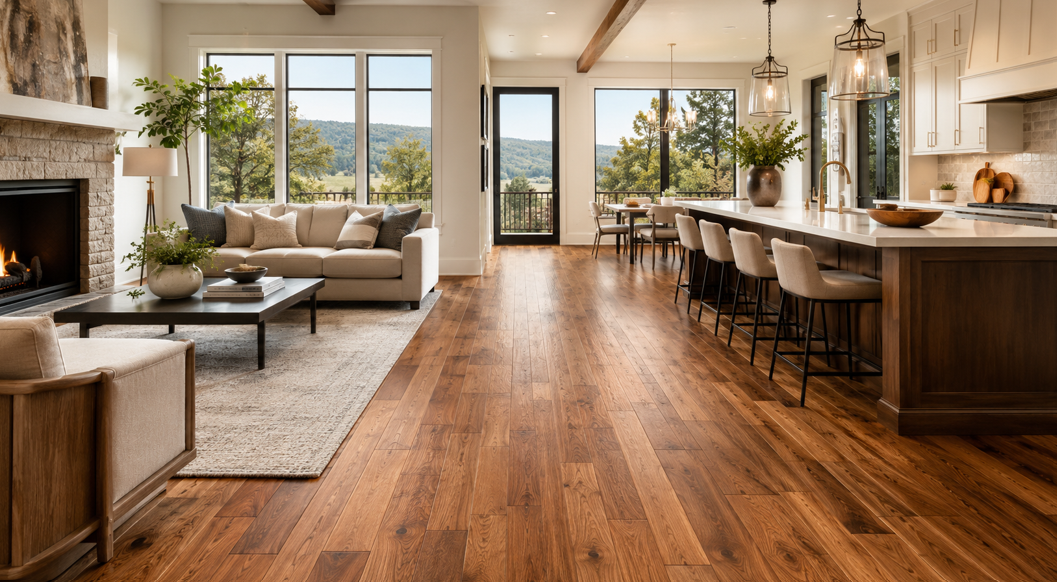
The Direct Answer for Penn Valley Homeowners
Yes, hardwood flooring can increase a home’s appeal and may support a stronger resale value, but it does not add the same fixed dollar amount to every property. The result depends on the home’s condition, the quality of the flooring, the installation, the local market, and how well the new floor fits the rest of the house.
Buyers often notice flooring within seconds of entering a room. Worn or mismatched surfaces can make a property feel dated, while a clean, cohesive hardwood floor can create a warmer first impression.
The value is not only financial. Hardwood can also make a home easier to market because many buyers see it as attractive, durable, and timeless. It works with rustic, traditional, transitional, and contemporary interiors, which gives future owners room to personalize the space.
At Premier Flooring Center, homeowners can compare hardwood styles with an experienced, employee-owned team that has served Nevada County and surrounding communities since 1990. The company also offers professional flooring installation and design guidance for residential projects in Penn Valley and nearby areas.
National research gives hardwood a strong track record, although the numbers need context. The National Association of REALTORS® reported in its 2022 Remodeling Impact Report that refinishing hardwood floors had an estimated 147 percent cost recovery, while installing new wood flooring had an estimated 118 percent cost recovery. Those figures were national estimates from that report, not a promise for a specific Penn Valley property or a guaranteed return in 2026.
The practical answer is simple: hardwood can be a valuable improvement when it corrects a visible weakness, suits the home, and is completed to a high standard.
Why Buyers Respond Positively to Hardwood Floors
Hardwood has an emotional advantage that is easy to understand. It brings natural color, visible grain, and a sense of permanence into a room. Buyers may not know the wood species or finish when they first walk in, but they can still respond to the overall feeling.
It Creates a Strong First Impression
Flooring is one of the largest uninterrupted surfaces in a home. When it looks consistent and well maintained, the entire property can feel cleaner and more finished. That matters in listing photos, private showings, and open houses.
Hardwood may also help highlight other features, including:
Stone fireplaces
Exposed beams
Large windows
Open living areas
Wood cabinetry
Built-in shelving
Neutral paint colors
In many Penn Valley homes, these features already create a warm, foothill-inspired character. A thoughtfully chosen hardwood floor can support that character without making the interior feel overly rustic.
It Gives Buyers Design Flexibility
A floor with a balanced natural tone can work with many furniture styles and color palettes. Buyers can imagine adding their own rugs, sofas, dining sets, and artwork without feeling that the flooring needs immediate replacement.
That flexibility can reduce a common source of hesitation because buyers are less likely to view the flooring as an immediate replacement project.
It Signals Care and Maintenance
Well-kept hardwood can make a home feel cared for. This does not mean buyers assume every other component is perfect, but visible condition influences perception. A smooth transition between rooms, clean edges, and a consistent finish can communicate that the property has received thoughtful attention.
Poorly installed or neglected wood can send the opposite message. Gaps, squeaks, deep scratches, moisture damage, and uneven transitions may cause buyers to wonder what else needs work. The value comes from the complete result, not from the material name alone.
What Appraisers Actually Consider
Homeowners sometimes expect an appraiser to assign a simple premium to hardwood, such as a set amount per square foot. Residential valuation is more nuanced.
Fannie Mae explains that lenders rely on appraisers for an objective opinion of market value and that appraisal reports need to reflect the property’s condition and marketability. Appraisers also analyze comparable sales and changing market conditions rather than treating one feature as a universal price adjustment.
Comparable Homes Matter Most
An appraiser looks at how the subject property compares with relevant recent sales. Flooring can contribute to an overall condition or quality assessment, but its effect depends on what buyers expect in that area and price range.
For example, hardwood may have a stronger influence when:
Comparable homes commonly have updated hard-surface flooring
The existing floor is visibly worn or inconsistent
The new floor improves several connected living spaces
The material and workmanship fit the home’s quality level
Buyers in the market respond positively to the style
Its influence may be smaller when the home already has attractive flooring, the project covers only a limited area, or other major repairs dominate the property’s condition.
Marketability Is Different From a Guaranteed Appraisal Increase
A home can become easier to sell without receiving a dollar-for-dollar increase in appraised value. Marketability includes how buyers perceive the property, how well it compares with competing listings, and whether it feels move-in ready.
This is why hardwood can still be a smart pre-sale improvement even when the final appraisal does not separately identify the full project cost. A better presentation may attract more interest, reduce objections, or help the home stand out among similar options.
The latest NAR Remodeling Impact Report, released in April 2025, also reinforces a broader point: homeowner enjoyment, buyer appeal, and cost recovery do not always move together. The projects that create the most satisfaction are not necessarily the projects with the highest resale recovery.
Which Hardwood Choices Have the Broadest Resale Appeal?
The most valuable hardwood choice is rarely the most dramatic one. For resale, broad appeal usually comes from a floor that feels natural, coordinated, and appropriate for the home.
Medium Natural Tones
Medium oak, hickory-inspired browns, and other balanced wood colors are often easier to live with than very pale or nearly black floors. They provide warmth, show grain clearly, and coordinate with a wide range of cabinets and furnishings.
These tones can also be visually forgiving. Dust, pet hair, and minor marks may be less obvious on a floor with natural variation than on a highly uniform dark surface.
Matte and Low-Sheen Finishes
A lower-sheen finish tends to create a relaxed, modern look. It can also make small scratches and everyday wear less noticeable than a highly reflective surface.
The finish still needs to suit the wood and the room. A matte floor in a rustic living area may feel natural and comfortable, while a slightly higher sheen could work in a more formal setting. The goal is consistency, not following a trend at the expense of the home’s character.
Colors That Work With Existing Features
Before selecting hardwood flooring, compare samples with the home’s cabinets, stonework, wall color, beams, and largest furniture pieces. A beautiful floor can still feel wrong when its undertone clashes with permanent finishes.
Warm oak may pair well with cream walls and stone. A neutral brown can balance honey-toned cabinetry. A lightly smoked finish may complement black metal accents and contemporary furniture. The strongest choice connects the room rather than competing with it.
Solid Hardwood or Engineered Hardwood for Resale?
Both solid and engineered hardwood can add beauty and buyer appeal. The better choice depends on the home, the installation area, and the performance requirements.
Solid Hardwood
Solid hardwood is made from a single piece of wood. Many buyers value its traditional construction and the possibility of refinishing it in the future, depending on board thickness and condition.
It can be a strong fit for main living areas, bedrooms, dining rooms, and other above-grade spaces where site conditions support the installation method.
Its advantages can include:
Authentic wood construction
Long service life with proper care
Potential for future refinishing
Familiar appeal to buyers
Solid wood also responds to changes in moisture and humidity, so product selection, acclimation, subfloor preparation, and installation details matter.
Engineered Hardwood
Engineered hardwood uses a real wood surface layer over a layered core. That construction can provide greater dimensional stability in some settings and may offer more installation flexibility.
It can be attractive for homeowners who want genuine wood with a product structure suited to a particular subfloor or area of the home. Refinishing potential varies by product because the thickness of the wear layer is not the same across all engineered floors.
From a resale perspective, the label alone does not settle the question. Buyers are more likely to notice the floor’s appearance, condition, continuity, and quality. A well-selected engineered hardwood floor can make a stronger impression than a poorly installed solid wood floor.
Condition and Installation Have a Major Effect on Value
Hardwood contributes most when the finished floor looks intentional and performs well. Installation quality can determine whether the investment feels premium or problematic.
Subfloor Preparation
A flat, clean, stable subfloor supports a better result. Uneven areas can lead to movement, noise, or visible irregularities. Existing flooring, moisture conditions, and the installation method all need to be assessed before work begins.
Transitions and Room Flow
Buyers notice awkward thresholds and abrupt changes between materials. When hardwood runs through connected living areas, it can make the floor plan feel more cohesive.
Different rooms can still use different surfaces, but the transitions need to look planned and finished.
Professional Detail Work
Baseboards, door jambs, vents, stair edges, and floor-height changes affect the final appearance. Clean detail work can make the floor feel like part of the home rather than a late addition.
Following the manufacturer’s installation requirements helps protect performance expectations.
Ongoing Care
Buyers do not expect a permanently flawless floor, but they respond positively to a clean, well-maintained surface.
Simple habits can protect its appearance:
Use felt pads under furniture
Clean spills promptly
Place mats at exterior doors
Follow the manufacturer’s cleaning guidance
Avoid dragging heavy furniture
Monitor indoor conditions where recommended
Good care supports both daily enjoyment and future presentation.
Refinish Existing Hardwood or Install New Flooring?
Replacing a floor is not always the best first move. Existing hardwood may have more value than it appears to have, especially when wear is mostly at the surface.
Refinishing May Be the Better Choice When
The boards are structurally sound
Scratches and dullness are the main concerns
The current species and width suit the home
There is enough usable wood for refinishing
The layout already has good continuity
Refinishing can restore color and sheen while preserving material already in the house. The 2022 NAR report’s strong cost-recovery estimate for refinishing reflects why this option deserves consideration, although local results still vary.
Replacement May Make More Sense When
Water damage is widespread
Boards are badly cupped, split, or unstable
Previous sanding has reduced usable thickness
The floor has extensive patching or mismatched sections
The layout needs a more cohesive surface
The existing material cannot support the desired result
A professional assessment can help separate cosmetic wear from deeper damage. That prevents spending on replacement when restoration is realistic, or investing in refinishing when the underlying floor cannot deliver a dependable finish.
How to Think About Return on Investment
A useful flooring decision starts with the homeowner’s goal. Are you preparing to list soon, planning to stay for several years, or improving a recently purchased home?
Selling in the Near Future
For a near-term sale, prioritize broad appeal and visible condition. Neutral wood tones, consistent room flow, and a clean finish are generally safer than highly personalized colors.
Ask a local real estate professional how competing properties are presented. Comparable listings can reveal whether updated wood floors are common, expected, or a meaningful point of difference.
Avoid assuming that the highest-priced material will create the highest return. Spending needs to remain proportionate to the home and neighborhood.
Staying for Several Years
Homeowners who plan to stay can give more weight to daily enjoyment. A floor that improves comfort, style, and ease of care provides value long before resale.
Even when future resale recovery is uncertain, years of daily use can make the project worthwhile.
Calculate the Full Project Cost
Include more than the price of the boards. A realistic budget may involve:
Removal and disposal of existing flooring
Subfloor preparation or repairs
Materials and trim
Professional installation
Furniture moving
Transitions and stair components
Finishing work around baseboards or doors
Compare the full project cost with the likely benefit rather than relying on a national percentage alone.
When Hardwood May Not Be the Best Pre-Sale Project
Hardwood is appealing, but it is not automatically the first renovation every seller needs.
A different project may deserve priority when the property has:
Active roof leaks
Plumbing or electrical concerns
Structural issues
Significant water damage
Failing heating or cooling equipment
Safety problems
Major exterior deterioration
Buyers and appraisers consider the property as a whole, so beautiful floors cannot offset every serious defect.
Hardwood may also be a weaker investment when the current flooring is already clean, consistent, and appropriate. Replacing a serviceable surface shortly before selling can reduce the chance of recovering the project cost.
In some homes, refinishing, professional cleaning, or repairing a limited damaged area may provide a better result. The right decision is the one that removes the largest buyer objection without over-improving the property.
Make the Improvement Count
Hardwood flooring can increase buyer appeal, strengthen a home’s presentation, and support resale value in Penn Valley. The strongest results come from choosing a suitable product, coordinating it with the house, and completing the installation carefully.
The answer is not that every hardwood project produces a guaranteed profit. National research has shown strong cost recovery for wood-floor refinishing and new wood flooring, but actual results depend on local demand, comparable sales, project cost, condition, and timing.
For most homeowners, the smartest approach is to focus on four priorities:
Choose a natural style with broad appeal
Keep the investment proportionate to the property
Address preparation and installation details
Consider both resale potential and years of personal enjoyment
A well-planned floor can make a home feel warmer, more cohesive, and more move-in ready. Those qualities matter whether you are listing next season or planning to enjoy the property for years.
To compare hardwood options for your Penn Valley home and discuss the right approach for your project, get in touch with the Premier Flooring Center team.


