

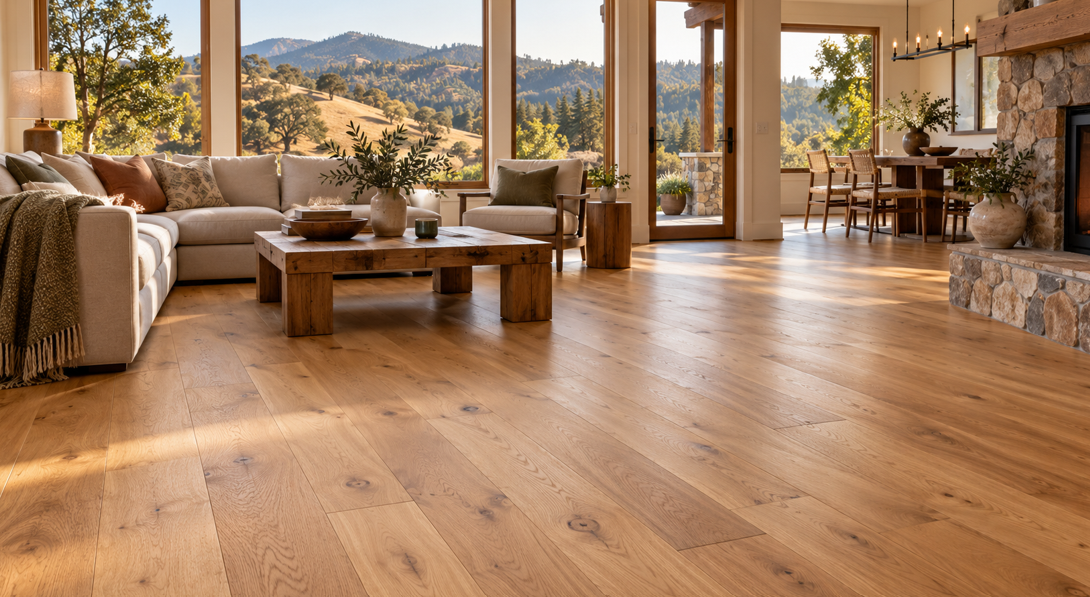
Hardwood floors feel right at home in Penn Valley. Whether you live near Lake Wildwood or on a few acres among the oaks and pines, real wood brings warmth, character, and a timeless look that suits foothill living. But the Sierra foothills also bring hot, dry summers, cool and damp winters, and dusty, smoky fire seasons. Understanding how these conditions affect wood helps you choose the right floor and keep it beautiful for years.
At Premier Flooring Center, our employee-owned team has helped Nevada County homeowners choose and install hardwood since 1990. In this guide, we share what you need to know about hardwood in Penn Valley homes.
How the Foothill Climate Affects Hardwood
Wood is a natural material that responds to changes in temperature and humidity. It expands slightly when it absorbs moisture and shrinks when it dries out.
In Penn Valley, that means:
Dry summer heat can cause small gaps between boards as wood releases moisture.
Damp winters can cause boards to expand, sometimes leading to slight cupping.
Big day-to-night temperature swings add to the movement.
These changes are normal in small amounts. The key is choosing the right type of hardwood and keeping indoor conditions as steady as possible.
Solid vs. Engineered Hardwood
Solid Hardwood
Solid hardwood is milled from a single piece of wood, usually about three-quarters of an inch thick. It can be sanded and refinished many times, making it a long-lasting investment. It works best over a wood subfloor in homes with steady climate control.
Engineered Hardwood
Engineered hardwood has a real wood top layer bonded to a stable, cross-layered core. This construction resists expansion and contraction much better than solid wood, which makes it a smart choice for foothill homes with seasonal swings. It can also be installed over concrete and is often compatible with radiant heat.
For many Penn Valley homes, engineered hardwood offers the best balance of beauty and stability.
Managing Indoor Humidity
Keeping indoor humidity steady is one of the best things you can do for hardwood. Aim for 35 to 55 percent relative humidity year-round.
Helpful tips:
Use a humidifier in summer and during heating season when indoor air gets very dry.
Run a dehumidifier if your home feels damp during wet winters.
Check crawl spaces for proper ventilation and vapor barriers.
Use a simple hygrometer to track humidity levels.
Protecting Hardwood From Dust and Smoke
Wildfire smoke and summer dust can leave a fine, gritty film on floors. Grit acts like sandpaper underfoot, wearing down the finish over time.
To protect your floors:
Sweep or vacuum often, especially during smoke season.
Use a microfiber mop to trap fine particles.
Place mats at every entry.
Run air purifiers to reduce airborne dust.
Avoid wet mopping, which can push grit into the finish.
Best Hardwood Species for Foothill Homes
White Oak
White oak is hard, durable, and naturally more moisture resistant than many species. Its clean grain suits rustic and modern homes alike.
Hickory
Hickory is very hard and handles busy households with pets and kids well. Its natural color variation adds rustic character that suits foothill style.
Maple
Maple offers a smooth, light look that brightens rooms during darker winter months.
Walnut
Walnut brings a rich, dark elegance, ideal for formal living and dining spaces.
Hardwood Design Trends for 2026
Penn Valley homeowners are embracing:
Wide plank white oak for a clean, open feel
Warm natural tones like honey and wheat
Wire-brushed and hand-scraped textures for rustic character
Matte finishes that hide dust and footprints
Herringbone patterns for a custom touch
You can explore species, colors, and finishes in our hardwood flooring collection, or book a shop-at-home appointment to see samples in your own space.
Hardwood for Lake Wildwood Homes
Homes near Lake Wildwood often see more foot traffic from guests, swimsuits, and summer activities. Engineered hardwood with a durable finish is a smart choice, along with mats at lakeside entries and a strict wipe-it-up-fast rule for wet feet.
Caring for Your Hardwood Floors
Sweep or vacuum often to remove grit.
Use a hardwood-safe cleaner with a barely damp mop.
Never wet-mop or use steam cleaners.
Add felt pads under furniture.
Close blinds during the brightest hours to reduce fading.
Why Professional Installation Matters
Hardwood needs time to acclimate, careful moisture testing, and proper expansion gaps to perform its best in the foothills. Our experienced installers handle every step, from subfloor preparation to final finishing. We also offer flooring repairs, so if a board is ever damaged, we can help.
Common Questions From Penn Valley Homeowners
Is engineered hardwood real wood?
Yes. The top layer is real hardwood, so it looks and feels like solid wood.
How often does hardwood need refinishing?
Most homes benefit from a full refinish every 10 to 15 years, depending on traffic and care.
Can hardwood go in a kitchen?
Yes, with care. Engineered hardwood with a durable finish works well in kitchens. Place mats by the sink and dishwasher, and wipe up spills promptly to protect the finish.
Does hardwood add value to a home?
Many buyers in Nevada County look for hardwood floors. A well-kept hardwood floor often adds appeal and can help a home stand out when it is time to sell.
Bring Natural Warmth Home
Hardwood can thrive in Penn Valley homes when you choose the right product, manage indoor humidity, and protect it from grit and dust. Whether you prefer the longevity of solid hardwood or the stability of engineered wood, you can enjoy beautiful floors for years to come.
Schedule a free in-home measurement or visit our Grass Valley showroom. We are here to help you find the perfect hardwood floor for your home.


