

Why Apartment Noise Feels So Noticeable
Apartment living puts several households close together, so ordinary sounds can become hard to ignore. Footsteps cross the ceiling. A chair moves across the floor. Children run through a hallway. A television reflects off bare walls, and a phone call carries farther than expected.
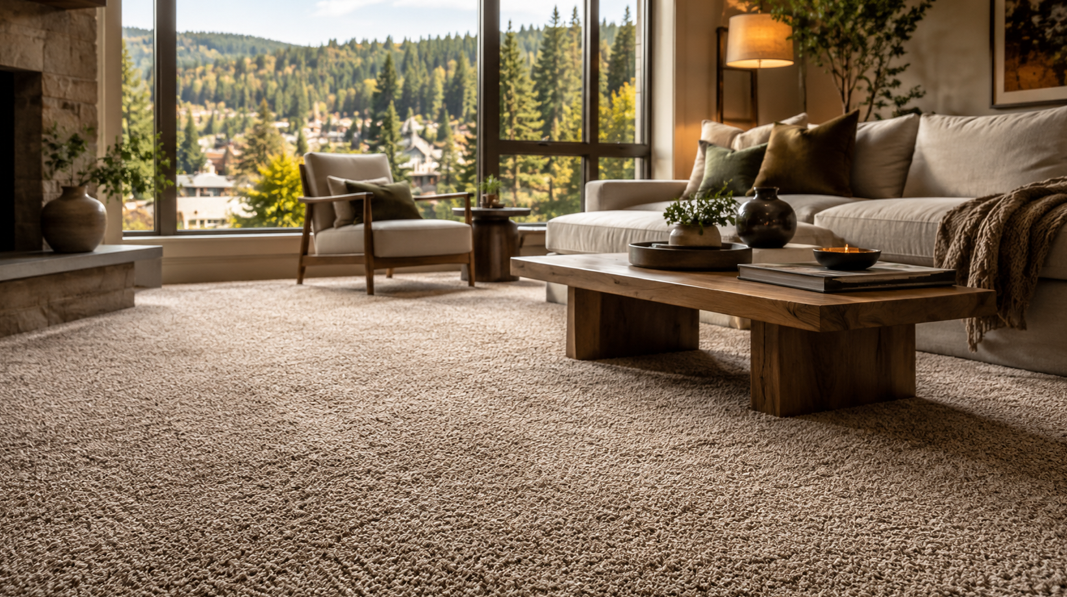
Flooring cannot solve every acoustic concern in a multifamily building, but it can change how a room sounds and how much impact noise travels through the floor. Carpet is particularly useful because its soft, fibrous surface absorbs some sound within the room while also cushioning contact between feet, furniture, and the subfloor.
The Carpet and Rug Institute describes carpet as both a floor covering and an acoustic aid. Its technical guidance says properly selected carpet can absorb airborne noise, reduce sound created at the surface, and reduce impact-sound transmission to rooms below.
That makes carpet worth considering in Nevada City apartments where comfort, privacy, and neighborly living matter. It can help a living room feel calmer, make a bedroom less echoey, and soften the repeated footfall noise that often travels from an upper unit to the apartment below.
At Premier Flooring Center, renters, homeowners, landlords, and property managers can compare carpet styles with guidance from an experienced, employee-owned local team. The right choice depends on more than color. Pile construction, cushion, room use, installation, and the building’s floor-ceiling assembly all affect the finished result.
The Three Types of Noise Carpet Can Influence
It helps to identify the type of sound causing the problem before choosing flooring. Apartment noise generally falls into three broad categories, and carpet does not affect each one equally.
Impact Noise
Impact noise begins when something strikes or presses against a building surface. Common examples include:
Footsteps
Children running or jumping
Chairs being pulled across the floor
A dropped toy or household item
Pet movement
Exercise equipment contacting the floor
This is where carpet often provides its clearest benefit. The fibers and cushion soften the contact before as much energy reaches the floor structure. That can reduce the sharpness of footsteps inside the room and limit some of the impact sound heard below.
ASTM’s test method for floor coverings makes an important point: impact performance depends on both the covering and the underlying floor assembly. The same carpet can produce different results over concrete, plywood, or other constructions, so a product rating cannot guarantee identical performance in every apartment.
Airborne Noise
Airborne noise travels through the air before meeting walls, floors, ceilings, doors, and furnishings. Speech, television sound, music, and barking are familiar examples.
Carpet can absorb part of the sound that would otherwise reflect off a hard floor. This can reduce reverberation, which is the lingering or repeated reflection that makes a room feel echoey. A softer room can make conversations clearer and everyday sound less harsh.
Carpet does not soundproof a wall or stop every voice from reaching the next unit. Airborne sound can pass through walls, doors, vents, windows, and gaps around building elements. Carpet is best viewed as one useful part of the room’s acoustic treatment.
Structure-Borne and Low-Frequency Noise
Some sound travels through the building structure itself. Heavy bass, mechanical equipment, loose framing, plumbing vibration, and certain low-frequency footfall sounds can be particularly hard to control.
The current ASTM classification for impact-noise ratings notes that standard ratings do not cover every low-frequency sound or noises caused by loose elements in a joist floor, such as squeaking, crunching, or rattling.
Carpet may make these sounds less prominent in some situations, but it cannot repair a loose subfloor, isolate mechanical equipment, or replace a professionally designed acoustic ceiling or wall assembly.
How Carpet Softens Footsteps and Everyday Movement
Hard surfaces create direct contact between shoes, furniture, pet claws, or dropped objects and the floor. That contact can produce a distinct click, scrape, or thump.
Carpet changes the first point of contact. The pile bends under pressure, and the cushion beneath it compresses. Together, they reduce some of the immediate surface noise and impact energy.
A Quieter Surface Inside the Apartment
The benefit is not limited to the neighbor downstairs. People within the same apartment may notice that movement sounds softer. Early risers can walk through a bedroom with less sharp footstep noise, children’s play can sound less abrupt, and a pet moving through a hallway may be less noticeable.
This can be helpful in:
Upstairs apartments
Shared apartments with different schedules
Homes with babies or young children
Units with pets
Bedrooms beside living areas
Apartments used for remote work
Buildings with long interior hallways
Less Impact Reaching the Room Below
Laboratory testing summarized by the Carpet and Rug Institute found substantial improvements when carpet and cushion were added to the tested concrete and wood-joist floor-ceiling assemblies. The bulletin also showed that the results were lower for the tested wood-joist assembly than for concrete, reinforcing that the building construction matters.
The practical takeaway is not that every carpet reaches a specific sound rating. It is that a properly selected carpet-and-cushion system can provide meaningful impact-noise control, while the total result still depends on the floor, ceiling, framing, installation, and adjoining construction.
Why Carpet Makes Rooms Feel Less Echoey
Noise problems are not always about sound entering from another unit. Sometimes the room itself feels loud.
A sparsely furnished apartment with hard flooring, bare walls, large windows, and a smooth ceiling can reflect sound repeatedly. Conversations may feel sharper, television volume may creep upward, and small noises can seem more prominent than they are.
Carpet adds a broad absorbent surface across the floor. Instead of reflecting as much sound back into the room, the fibers absorb part of the sound energy.
Sound Absorption and Room Comfort
The Carpet and Rug Institute uses Noise Reduction Coefficient, or NRC, to describe sound-absorption performance. Its technical bulletin reports that tested carpets absorbed sound to varying degrees and that adding cushion improved absorption in the assemblies tested. It also notes that construction details such as pile surface, height, backing permeability, and cushion can influence results.
For residents, the effect is usually experienced as a calmer room rather than a laboratory number. Speech can feel more natural, audio can sound less harsh, and the apartment may have less of the hollow quality associated with mostly hard surfaces.
Furnishings Still Matter
Carpet works alongside other soft materials. Curtains, upholstered furniture, bedding, fabric wall hangings, and area rugs can all reduce reflections. Bookcases and irregular furnishings may also help scatter sound.
The largest benefit often comes from treating the room as a complete space. Carpet provides a strong foundation because it covers so much surface area, but it does not need to work alone.
Carpet and Cushion Work as a System
Choosing carpet without considering the cushion can limit the result. Cushion supports the flooring, affects how it feels underfoot, and can contribute to sound absorption and impact control.
The thickest cushion is not automatically the best. The carpet manufacturer’s requirements, the room’s traffic level, accessibility needs, door clearances, and installation method all need to be considered.
What Cushion Adds
A suitable cushion can:
Soften the feel of footsteps
Reduce some surface and impact noise
Support the carpet construction
Improve comfort underfoot
Help the flooring perform as intended
CRI’s acoustical testing found that carpet over cushion generally produced better sound-absorption values than carpet installed directly over concrete in the tested systems. It also found that cushion materials significantly improved impact-noise results in those laboratory assemblies.
Why Product Compatibility Matters
A cushion that is too soft, too thick, or otherwise unsuitable for a particular carpet may affect appearance or performance. Stairs, hallways, wheelchair routes, and commercial-style apartment corridors may require different considerations from a low-traffic bedroom.
When comparing carpet flooring, ask about the complete system rather than selecting the surface material in isolation. A knowledgeable flooring professional can help match the carpet, cushion, installation method, and intended use.
Which Carpet Styles Work Well in Apartments?
The best apartment carpet balances acoustic comfort with durability, appearance, maintenance, and the way the room is used.
Textured Cut Pile
Textured cut-pile carpet has individual yarn ends at the surface. The texture can create a soft, residential look while helping disguise footprints and vacuum marks.
CRI’s testing found that cut pile produced greater sound absorption than loop pile when otherwise identical specifications were compared, although real-world performance still varies by product and assembly.
This style can work well in bedrooms, living rooms, and quieter household spaces where softness is a priority.
Loop Pile
Loop-pile carpet keeps the yarn in loops at the surface. It can provide a tidy, durable appearance and is often considered for active areas.
Low, dense loops may suit hallways, home offices, and apartments where furniture moves frequently. Residents with pets need to consider whether claws could catch on a particular loop construction, since suitability varies by household and product.
Patterned and Multitone Carpet
Subtle patterns and blended colors can be practical in rentals and busy homes because they may conceal everyday variation better than a completely uniform pale surface.
A pattern can also add visual interest without requiring more furniture or decoration, which can be useful in a compact apartment.
Broadloom and Carpet Tile
Broadloom carpet can create a continuous, comfortable surface with fewer visible joins across a residential room. When installed over suitable cushion, it is often a strong choice for bedrooms and living spaces.
Carpet tile can make individual damaged sections easier to replace and may suit common areas, offices, or certain rental applications. Acoustic performance depends on its backing, installation, and the complete assembly, so it should not be assumed to perform exactly like cushioned broadloom.
Choosing Carpet for Different Apartment Rooms
A single apartment may benefit from more than one flooring approach. The amount of noise, traffic, moisture exposure, and furniture movement changes from room to room.
Bedrooms
Bedrooms are one of the strongest locations for carpet. Soft flooring reduces footstep noise, creates a warmer feel, and helps the room sound less reflective.
A comfortable cut pile or textured style can work well, provided it meets the household’s maintenance and durability needs.
Living Rooms
Living rooms combine conversation, television, music, children’s play, and furniture movement. Carpet can soften the overall sound while helping define the gathering area.
For a busy household, choose a construction designed for regular traffic and a color that fits realistic cleaning routines.
Hallways and Stairs
These are high-movement zones where footsteps are repeated throughout the day. Durable carpet and correct installation matter.
Stairs require particular attention to product suitability and secure installation. The selected style needs to remain stable and maintain a safe, consistent surface.
Home Offices
Carpet can reduce chair movement, footsteps, and room echo during calls. It may make recorded speech sound less hollow, although microphones, doors, wall construction, and background equipment also affect call quality.
A low, dense pile can make office-chair movement easier than a very soft, deep carpet. A chair mat may be appropriate where permitted and compatible.
What Carpet Cannot Fix
Clear expectations help residents and property owners choose the right solution.
Carpet cannot fully stop:
Bass-heavy music passing through walls
Voices traveling through poorly sealed doors
Plumbing or heating-system vibration
Noise through open windows
Squeaks caused by loose structural components
Sound leaking through electrical outlets or penetrations
Every impact from heavy exercise equipment
It also cannot compensate for a floor-ceiling assembly that requires structural acoustic work. In buildings with persistent noise complaints, an acoustic consultant or qualified building professional may need to assess the complete transmission path.
Carpet is most effective when the primary concern is room echo, surface noise, or routine impact from walking and household movement.
Practical Steps for Renters, Owners, and Property Managers
Residents do not always have the same freedom to replace flooring. The next step depends on who controls the unit and the scope of the project.
Renters
Review the lease and obtain written approval before changing permanent flooring. Ask whether the property has approved materials, colors, installers, or acoustic requirements.
When replacement is not available, a large area rug with a compatible rug pad can soften some surface noise. It will not provide the same coverage as wall-to-wall carpet, but it may improve a living area or bedroom.
Apartment Owners
Check building or association requirements before ordering. Some multifamily properties specify minimum acoustic ratings or require documentation for flooring changes.
Remember that laboratory ratings need context. ASTM explains that the same covering can perform differently on different floor assemblies, and laboratory test results are not automatically the same as field performance.
Landlords and Property Managers
Consider the full life of the flooring: expected traffic, cleaning, replacement planning, color continuity, cushion, installation access, and resident comfort.
A durable, neutral carpet can make upstairs units feel quieter while creating a warmer experience for incoming residents. Keeping product and color records can also simplify future repairs or unit turns.
Create a Calmer Apartment From the Floor Up
Carpet can make a noticeable difference in how a Nevada City apartment sounds. It softens footsteps, reduces surface noise, absorbs part of the airborne sound reflecting around the room, and can limit some impact transmission to the unit below.
The most important points are straightforward:
Carpet is particularly useful for footsteps and everyday impact noise.
It can reduce echo but does not soundproof walls, doors, or ceilings.
Cushion is an important part of the flooring system.
The building’s floor-ceiling construction changes the result.
Product style, installation, traffic, and maintenance all matter.
Low-frequency vibration and structural noise may need a different solution.
For bedrooms, living rooms, hallways, and home offices, the right carpet can help create a more relaxed and neighbor-friendly home. The strongest choice comes from matching the product and cushion to the room instead of relying on a single claim or rating.
To compare carpet styles, cushions, and installation options for an apartment or multifamily property, get in touch with the Premier Flooring Center team.


