

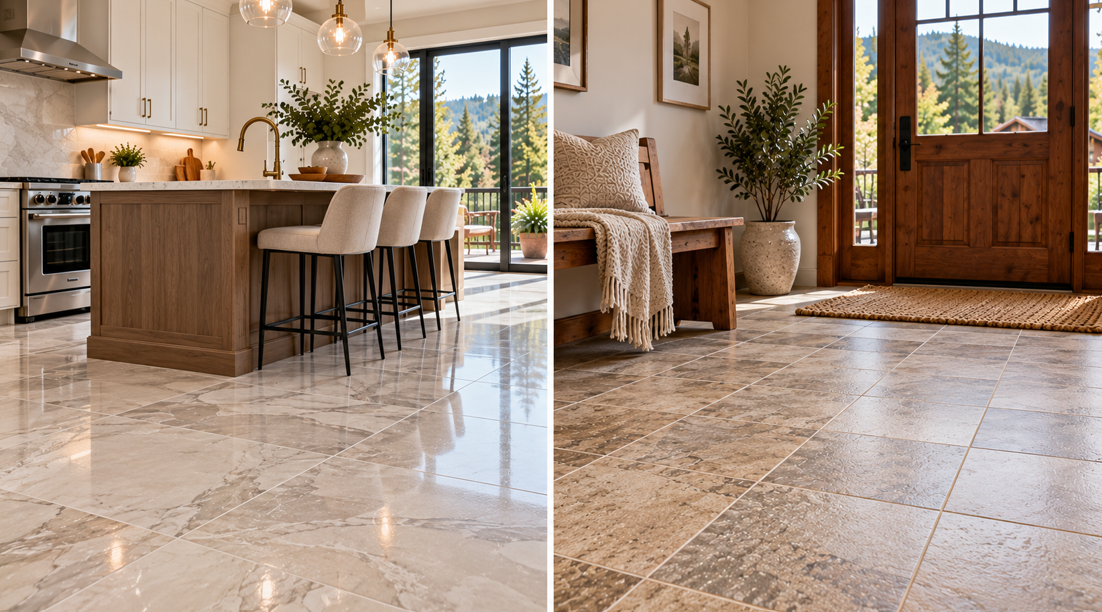
Tile is one of the most versatile floors you can choose, and it fits beautifully in the historic and rustic homes that give Nevada City its character. Once you start shopping, though, one question comes up quickly: porcelain or ceramic? The two look similar on the showroom floor, but they perform differently in daily life.
At Premier Flooring Center, our employee-owned team has helped Nevada County homeowners choose tile since 1990. This comparison breaks down the key differences so you can pick the right tile for each room in your home.
What Porcelain and Ceramic Have in Common
Both porcelain and ceramic tiles are made from natural clay that is shaped and fired in a kiln. Both offer:
A hard, durable surface that resists scratches
Easy cleaning with a damp mop
Endless design options, including wood, stone and patterned looks
Good resistance to everyday spills when properly installed and sealed at the grout
The difference comes down to the clay, the firing process and the resulting density.
How Porcelain Tile Differs
Porcelain is made from a more refined clay and fired at higher temperatures. The result is a denser, harder tile with very low water absorption.
Benefits of Porcelain
Highly water resistant, which makes it ideal for bathrooms, laundry rooms and mudrooms
Exceptionally durable in high-traffic areas such as entries and hallways
Through-body color in many styles, so chips are less noticeable
Rated for outdoor use in many cases, for covered porches and patios
Considerations
Porcelain is heavier and harder to cut, so professional installation is important. It also tends to cost a bit more than ceramic.
How Ceramic Tile Differs
Ceramic tile uses a coarser clay and is fired at lower temperatures. It is slightly softer and more porous than porcelain, with a glazed surface that provides color and protection.
Benefits of Ceramic
Budget-friendly, offering lasting value for many rooms
Easier to cut, which helps with detailed layouts and small spaces
Wide range of colors and glazes, including bold, handcrafted looks
A great choice for walls, backsplashes and lighter-traffic floors
Considerations
Because ceramic absorbs more water, it is better suited to indoor spaces. Chips can reveal a different color beneath the glaze.
Matching Tile to Nevada City Homes
Nevada City is known for its Gold Country heritage, with Victorian and craftsman homes sitting alongside newer mountain-style builds. Tile can respect that history while adding modern performance.
Historic homes: Classic hexagon, penny round and subway patterns in ceramic suit vintage bathrooms and kitchens.
Rustic builds: Porcelain wood-look and slate-look tiles bring warmth and texture without the upkeep of natural materials.
Modern updates: Large-format porcelain creates a clean, open feel in kitchens and living spaces.
Many local homeowners mix both: porcelain for floors and entries, ceramic for walls and backsplashes.
Tile and the Sierra Foothills Climate
Foothill weather makes a strong case for tile in certain rooms. Cool, wet winters bring muddy boots and dripping jackets through the door, and porcelain handles that moisture with ease. Hot, dry summers make tile's naturally cool surface a welcome feature in sunny rooms.
Tile also helps during wildfire smoke and dust seasons. Smooth, hard surfaces do not hold on to fine particles, so a quick sweep and damp mop keep floors fresh. Pine needles and grit from rural properties sweep right up as well.
If you worry about cold floors in winter, area rugs add warmth. Premier offers custom area rugs and rug binding, so you can create a rug sized perfectly for your space.
Room-by-Room Recommendations
Here is a quick guide to help you choose:
Entryways and mudrooms: Porcelain, for durability and water resistance
Bathrooms: Porcelain for floors and showers, ceramic for walls
Kitchens: Porcelain floors, ceramic or porcelain backsplashes
Laundry rooms: Porcelain, especially near the washer
Living areas: Large-format porcelain or wood-look porcelain
Covered porches: Porcelain rated for outdoor use
For more styles, sizes and finishes, explore our tile flooring collection and start narrowing down your favorites.
Tile Design Trends for 2026
This year's tile trends lean toward natural, grounded looks:
Wood-look porcelain planks in warm oak and walnut tones
Earthy terracotta and clay hues that echo the foothill landscape
Large-format stone looks with soft veining
Handmade-look ceramic with subtle color variation for backsplashes
Matte finishes that offer better traction and a relaxed feel
Caring for Porcelain and Ceramic Tile
Both tile types are easy to maintain:
Sweep or vacuum regularly to remove grit that can dull the surface.
Damp mop with a pH-neutral cleaner.
Seal grout lines as recommended to resist stains.
Use mats at entries to catch dirt and gravel.
With simple care, tile can last for decades and keep its good looks through every foothill season ahead.
Why Professional Installation Matters
Tile performance depends on what lies beneath it. A level subfloor, the right setting materials and careful grout work all affect how your floor looks and lasts. Porcelain in particular requires the right tools and experience to cut cleanly. Premier's experienced installers handle residential, commercial and school projects, and we bring that same care to every home.
Choose the Right Tile With Confidence
Porcelain and ceramic both have a valued place in Nevada City homes, old and new. Porcelain offers top durability and water resistance for floors, entries and wet areas, while ceramic brings budget-friendly beauty to walls, backsplashes and lighter-traffic rooms. Many homes benefit from a thoughtful mix of both.
Visit our Grass Valley showroom at 807 S Auburn St, call (530) 273-3711, or book a free in-home measurement through our shop at home service. Whatever your project, we are here to help you choose tile that suits your home, your style and the way you live.


