

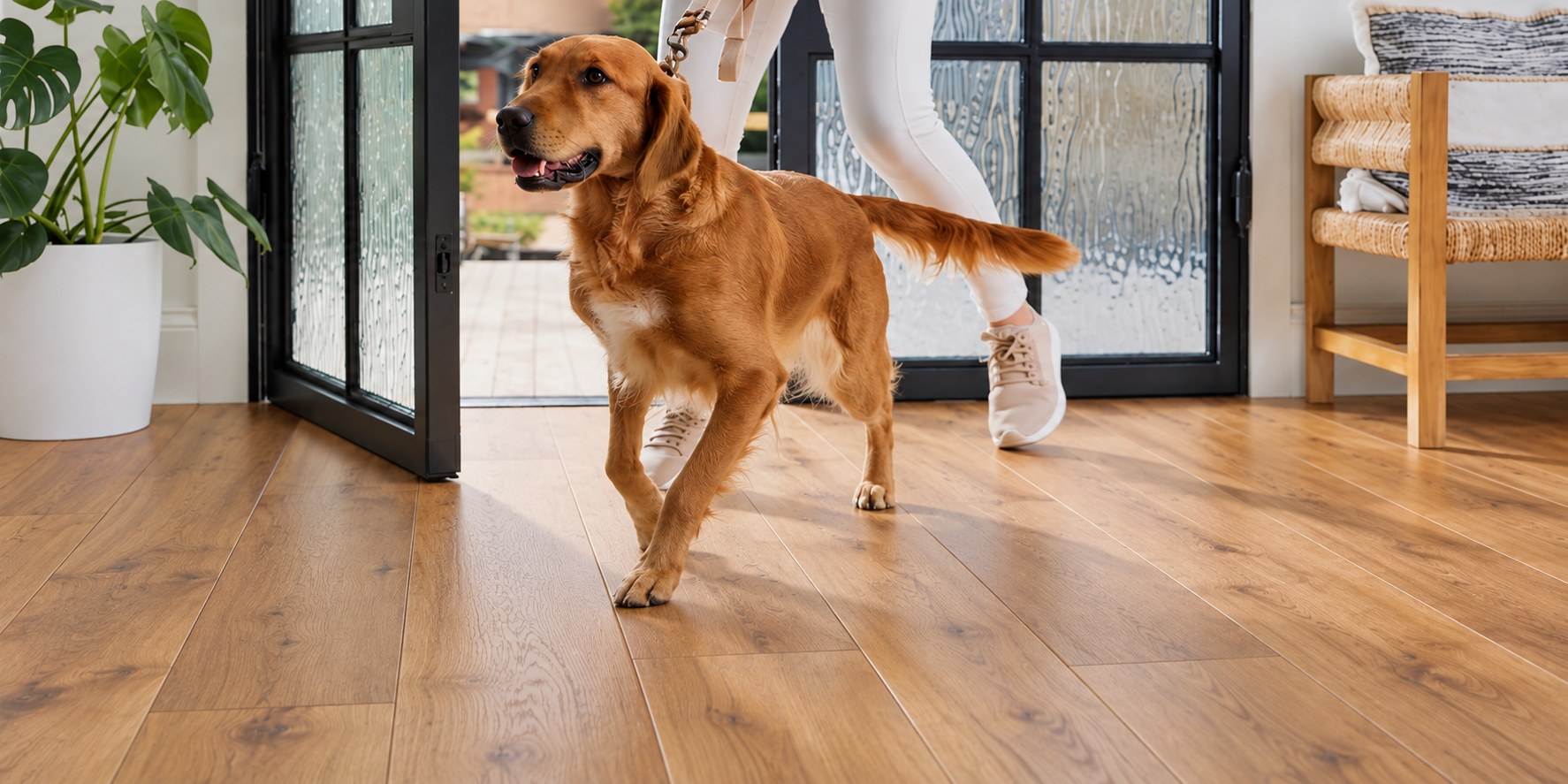
Towering ponderosa pines and red clay hills across Nevada County bring natural foothill scenery right to your doorstep. Outdoor adventures follow your family inside across entryways in Grass Valley and Nevada City. Sharp pine needles act like natural abrasives, while foothill red mud carries fine grit and moisture that wear down clear topcoats quickly if left unchecked.
Natural wood floors bring character and warmth to rural acreage, mid-century foothill ranches, and historic Victorian homes alike. Protecting your investment against seasonal mountain elements simply takes an understanding of how local soil, forest debris, and shifting weather patterns affect organic planks.
At a Glance: Foothill Hardwood Care
- Daily Grit Defense: Sweep dry pine needles and abrasive dust off high-traffic walkways using a soft microfiber mop or fine-bristle broom.
- Mud Containment: Place heavy-duty walk-off mats outside every exterior entrance and breathable rugs inside main doorways.
- Moisture Management: Clean tracked-in Sierra mud using a barely damp towel, never a soaking wet mop or steam cleaner.
- Climatic Stability: Keep indoor relative humidity between 35% and 55% to counteract dry foothill summers and wet winter rains.
- Protective Species: Select dense domestic oaks or wire-brushed textures that naturally camouflage minor dents and forest wear.
Pine Needles, Sticky Pitch, and Wood Finish Vulnerability
Pine needles carry rigid, pointed shafts that wedge into plank bevels and press into finish coatings under shoe heels and dog paws. Foot traffic grinds these needles across the floor, leaving microscopic scratches across polyurethane or aluminum oxide finishes that cause the top surface to look dull over time. Authentic hardwood provides dependable longevity across Nevada County homes, but coarse forest debris will test any topcoat without regular sweeping.
Fresh pine needles also carry sticky sap and pitch that transfer directly to indoor planks. Scraping sticky pitch spots with metal putty knives or scouring pads cuts right through protective sealants. Hold an ice cube in a plastic bag over the sap until it hardens, gently break off the brittle resin with a plastic edge, and wipe the area clean with a wood-safe cleaner.
Nevada County Red Mud and Seasonal Moisture
Winter rainstorms throughout the Sierra foothills turn clay soils into thick red mud that tracks easily onto interior planks. Wet mud contains fine silica sand that acts like liquid sandpaper beneath boots. Standing water seeps between plank edges when wet mud sits on seams, causing wood fibers to swell, cup, or darken along board margins.
Moisture requires careful handling on natural wood surfaces. High heat from steam apparatuses forces water vapor deep into wood pores, while excessive water breaks down adhesives and finish bonds. Let heavy mud clods dry slightly, vacuum the dry crumbs with a soft bare-floor brush, and wipe away residual clay dust using a clean, well-wrung microfiber cloth lightly misted with a pH-neutral cleaner.
Preventive Strategies for Foothill Entrances
Stopping forest debris at your home boundary preserves wood planks for decades and simplifies your daily routine:
- Install a coarse coir or rubber-grid scraper mat on the exterior porch to dislodge pine needles, leaves, and wet soil from boot treads.
- Place an absorbent, natural-fiber runner or indoor walk-off rug directly inside the entry to capture remaining water drops and fine dust particles.
- Lay down open-cell rug pads that allow airflow underneath, avoiding solid rubber backings that trap foothill condensation against wood surfaces.
- Keep a shoe rack and boot tray by your front, back, and garage doors, adopting a shoe-free household routine throughout rainy winter months.
- Trim your pets' nails regularly to minimize indentation risks, and keep a soft towel near side doorways to wipe down muddy paws after backyard runs.
Indoor Humidity Shifts in Sierra Homes
Nevada County experiences substantial climate swings, moving from dry summer heat waves to soaking Sierra winter storms. Solid wood expands as ambient air draws in seasonal moisture, and contracts when winter wood stoves or summer air conditioners run continuously. Keep your home relative humidity balanced between 35% and 55% using whole-home humidifiers during crisp dry months and exhaust fans during wet periods. Plank width and wood species can also influence how hardwood floors perform in Sierra’s changing climate conditions, as outlined in our hardwood flooring options.
Wood Species and Textures Built for Foothill Living
Species selection determines how easily your home handles outdoor tracking. Dense domestic species like White Oak and Hickory rank high on the Janka hardness scale, resisting pressure marks from mountain boots and fallen debris. Engineered plank construction also adds cross-ply dimensional stability that counteracts foothill subfloor movement.
Surface texture makes an enormous practical difference in foothill living spaces. High-gloss, smooth finishes highlight every pine needle scratch, dust streak, and clay footstep. Wire-brushed, hand-scraped, and low-sheen matte textures disguise everyday dust and integrate naturally with foothill architectural styles. An in-person design consultation lets you compare textures under authentic room lighting and match appropriate wood cuts to your home entryway layout.
Visit Premier Flooring Center in Grass Valley
Balancing real wood elegance and rugged foothill performance begins with experienced regional guidance. The local team at Premier Flooring Center has helped Nevada County homeowners select, install, and care for authentic wood floors for decades. Visit our showroom displays in Grass Valley, California to handle wire-brushed samples, review durable finish options, and request a free estimate for your next foothill home project.


